

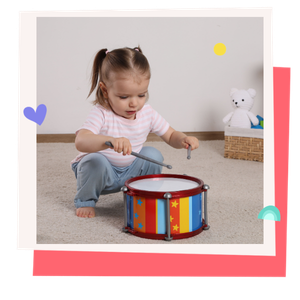
If you’ve ever listened to a native Spanish speaker, you’ve likely noticed a distinct, percussive rhythm. It sounds fast, rhythmic, and steady—often described as a “syllabic drumbeat.”
For English speakers, this is one of the most challenging hurdles to mastering the language. But the difficulty isn’t just about speed; it’s about a fundamental difference in how our brains process time and importance.
Stress-Timed vs. Syllable-Timed: The Secret to Sounding Like a Native
The secret lies in how different languages treat their beats. Most world languages fall into one of two categories: stress-timed or syllable-timed.
- English is stress-timed: We focus on “content words”—the important nouns, verbs, and adjectives—and rush through everything else. To keep a steady pulse between these “important” words, we “squash” the unstressed syllables in between.
- Spanish is syllable-timed: Every single syllable is given approximately equal weight and duration. There is no “mushing” of the small words to get to the big ones; every beat matters.
Why English Speakers “Eat” Syllables (and How to Stop)

As an English speaker, your brain is wired to hunt for the meaning-heavy parts of a sentence. This leads to a unique linguistic habit: vowel reduction.
In English, we hurry past the “connector” words (like to, the, or a) to get to the next big noun or verb. But we don’t stop there. Within those big words, we also rush through the “unimportant” syllables to reach the one that is stressed. We turn these secondary vowels into a neutral, “uh” sound called a schwa.
Think of how we say banana—it sounds like buh-NA-nuh. Even though “banana” is an important noun, we shortened the first and last “a” sounds into a schwa because our focus was entirely on the stressed middle syllable.
The Danger of the “Schwa”: How Vowel Reduction Changes Spanish Meaning
In Spanish, this habit is a recipe for being misunderstood. Spanish does not use the schwa. Banana must be a perfectly balanced ba-na-na. Because English speakers are used to hurrying past anything “unstressed,” they often “eat” the very syllables that give Spanish its clarity.
“Missing a beat” doesn’t just make you sound like an American; it can flip the meaning of your sentence entirely. Because the language is highly phonetic, changing the stress or shortening a vowel changes the grammar. This is most obvious in “meaning-flippers” like papa (potato) vs. papá (dad), or hablo (I speak) vs. habló (he/she spoke).
Building “Syllabic Awareness” in Kids Through Play
Most traditional tools try to teach pronunciation through cold correction: “You said it wrong; try again.” At FabuLingua, we know that doesn’t work for kids. Instead, we create a safe space for “Imitation with Intent” to help kids develop Syllabic Awareness—the ability to hear and produce every individual beat within a word.

How FabuLingua Uses CopyCat Mode and Scrambled Syllables to Master Phonics

CopyCat Mode: The Power of Contrast
In CopyCat Mode, children hear a native narrator say a full sentence like, “El unicornio aparece.” They record themselves and then—this is the magic part—they listen to both versions side-by-side.
They aren’t being told they are wrong by a teacher or a red “X” on a screen. Instead, they are being given the power of contrast. You might literally hear the shift in their practice:
- First try: “de repen…” (the English habit of shortening the word).
- Second try: “de-re-pen-te” (hitting every beat of the drum).
Because they can hear their version right next to the narrator’s, they notice the missing beats. They might realize, “Oh… I said ‘uni-cornio’ (3 beats) but the narrator said ‘u-ni-cor-nio’ (4 beats).” By hearing that contrast, they naturally adjust their own rhythm without any pressure.
Scrambled Syllables: Rebuilding the Beats
Next, we take those “chunks” of sound and break them apart in our Scrambled Syllables mini-game. If the word is interesante, an English speaker’s instinct is to say “in-trest-ing.”
In the game, they see the word for what it truly is—a series of equal beats: in – te – re – san – te. They tap each syllable, they hear it, they say it, and they rebuild the word piece-by-piece. This trains their ear to catch what was missing before.
This builds a structural understanding of Spanish. By building the word beat-by-beat, your child stops treating Spanish words like English “blobs” of sound and starts respecting the steady, signature drumbeat that makes Spanish sound authentic.


From Hesitation to Confidence
Most children stay quiet in a second language because they aren’t sure how to shape the words. They feel the “mush” in their mouth, and that creates hesitation.
By moving from noticing the rhythm (CopyCat Mode) to mastering the structure (Scrambled Syllables), that hesitation disappears. You’ll start to hear it in their practice: a word, a pause, and then a self-correction.
That pause isn’t a struggle; it’s a lightbulb moment. It’s the sound of a child mastering the music of Spanish, one beat at a time.
Want to see how your child’s pronunciation improves when they stop “eating” syllables? Download the FabuLingua App today!
At FabuLingua, we believe you can teach your kids Spanish at home. You just need the right tools that combine comprehensible input, stories, fun and games!
We invite you to discover the power of games and interactive comprehensible stories with
7 days FREE access to FabuLingua!
A world of magical stories awaits! Discover FabuLingua today>>